 ChronoWaves
Classic three-cycle biorhythms vs your body’s biological rhythms
Your body does not keep just one clock
Sleep stages, temperature, hormones and seasonal responses all change over time. Scientists group these biological rhythms by how long one complete cycle takes.
A rhythm is a repeating change measured through time
The scientific field that studies biological timing is called chronobiology. Researchers observe a process, measure how it rises and falls, and test whether the pattern persists or responds to time cues.
Some rhythms come from internal biological clocks. Others are direct responses to the environment. The difference matters: something that happens every day is not automatically controlled by a circadian clock.
Heartbeat and breathing are fast biological oscillations, but they are not usually what scientists mean by an ultradian clock. Ultradian examples more directly include recurring sleep stages and pulses of hormone release.
Four families, separated by time
The boundaries are useful labels rather than walls. Different textbooks use slightly different cut-offs, but the central idea remains the same.
Ultra diem, more than once a day
Ultradian rhythms
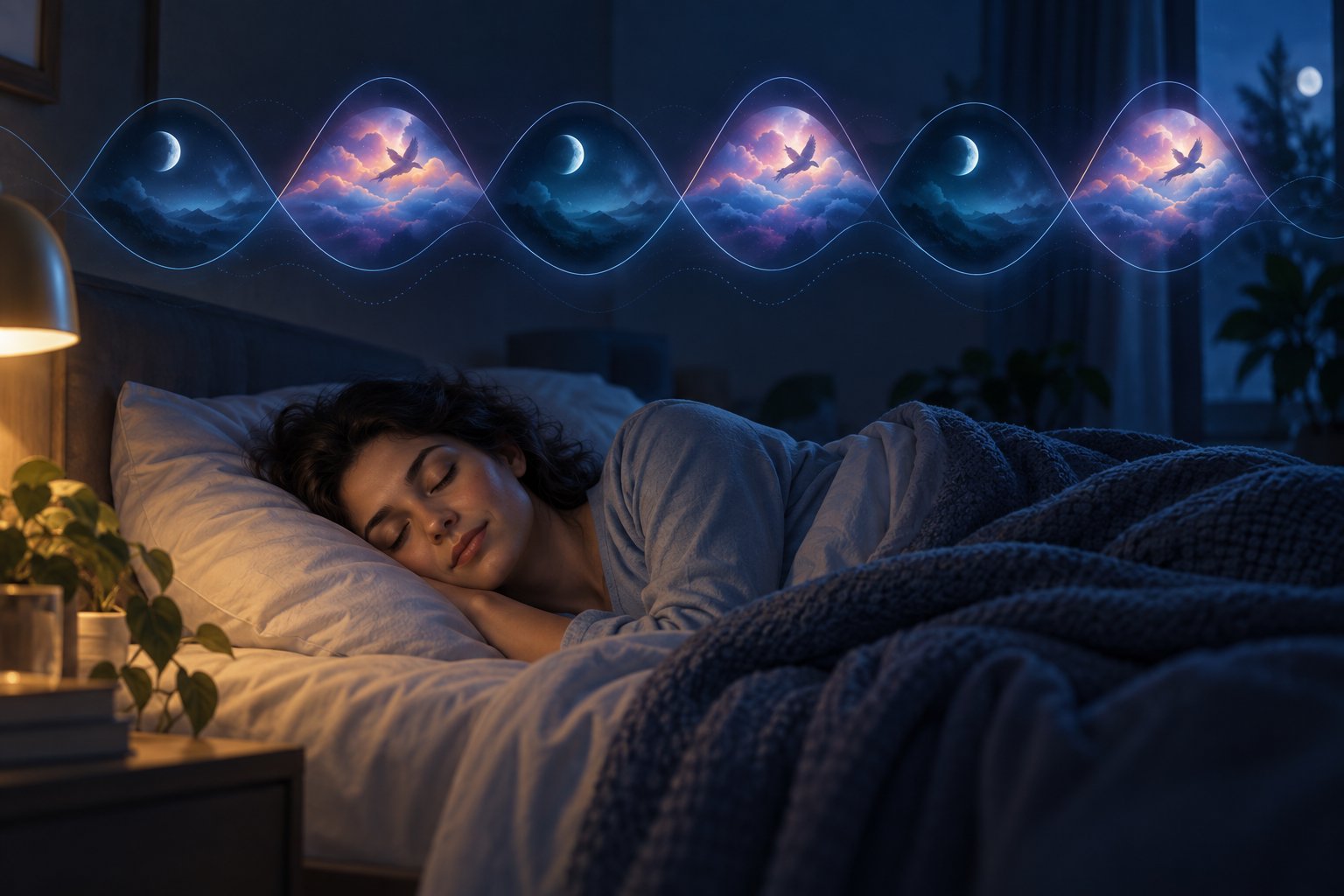
These repeat within a 24-hour day. During sleep, humans normally cycle through non-REM and REM sleep every 80 to 100 minutes, usually four to six times per night.
- REM and non-REM sleep cycling
- Pulses of hormone secretion
- Recurring feeding or activity patterns
It comes from the Latin:
- ultra: beyond
- diem: day
Ultradian describes a rhythm occurring more than once within a day, so each complete cycle lasts less than 24 hours.
Circa diem, about a day
Circadian rhythms
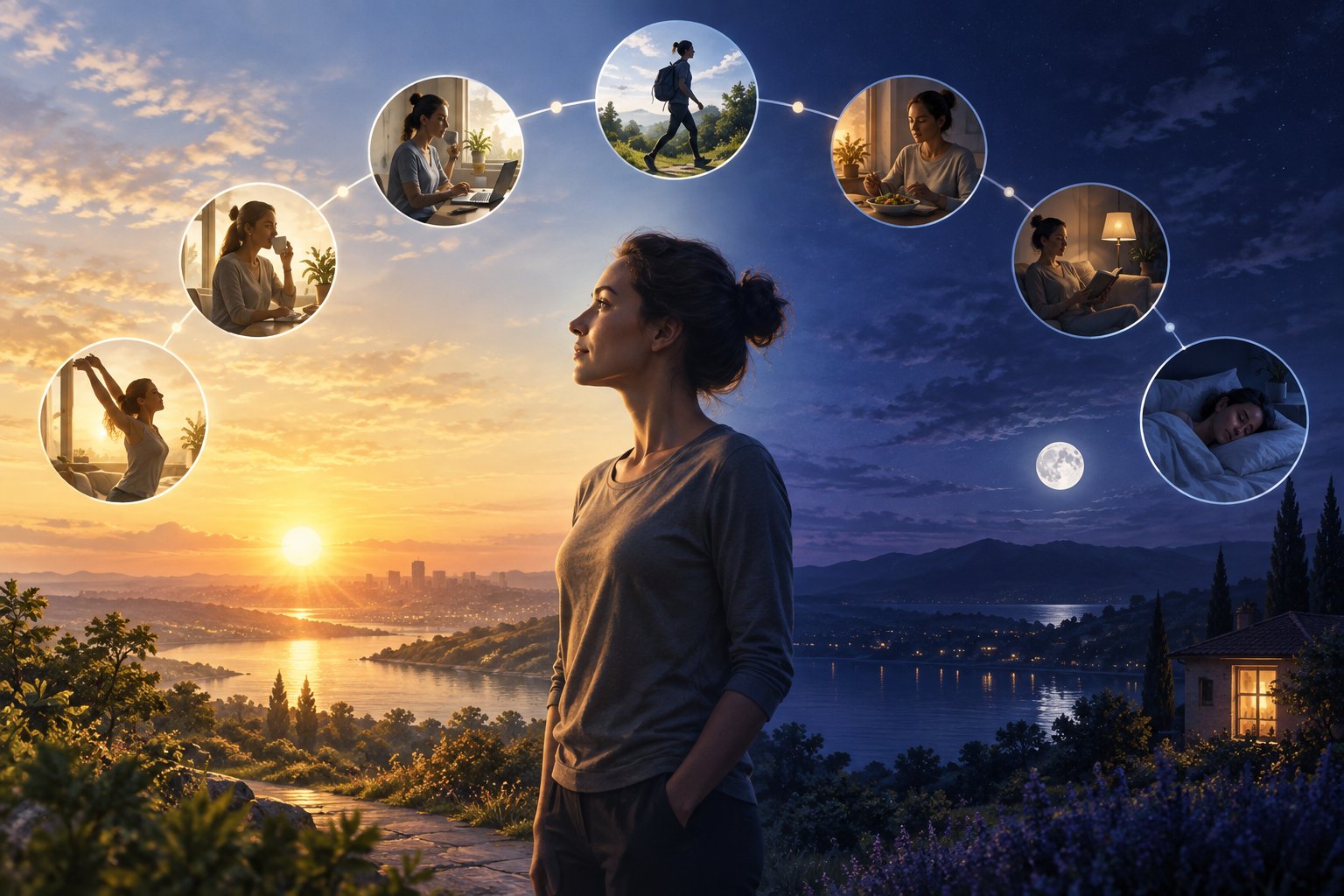
Light is the strongest time cue, helping this internal cycle stay aligned with the day outside.
- Sleep and wake timing
- Core body temperature
- Melatonin and cortisol timing
It comes from the Latin:
- circa: approximately or around
- diem: day
A circadian rhythm is an internally generated biological cycle lasting roughly 24 hours. Examples include the sleep-wake cycle, body temperature and the daily timing of hormones such as melatonin.
Infra diem, less than once a day
Infradian rhythms

These take longer than 24 hours to complete. The menstrual cycle is a familiar human example, but it is not a precise 28-day clock and varies between people and across months.
- Menstrual-cycle physiology
- Some immune and hormonal patterns
- Cycles extending over days or months
It comes from the Latin:
- infra: below or beneath
- diem: day
Infradian means the rhythm occurs less than once per day, so one complete cycle lasts longer than 24 hours.
Circa annum, about a year
Circannual rhythms
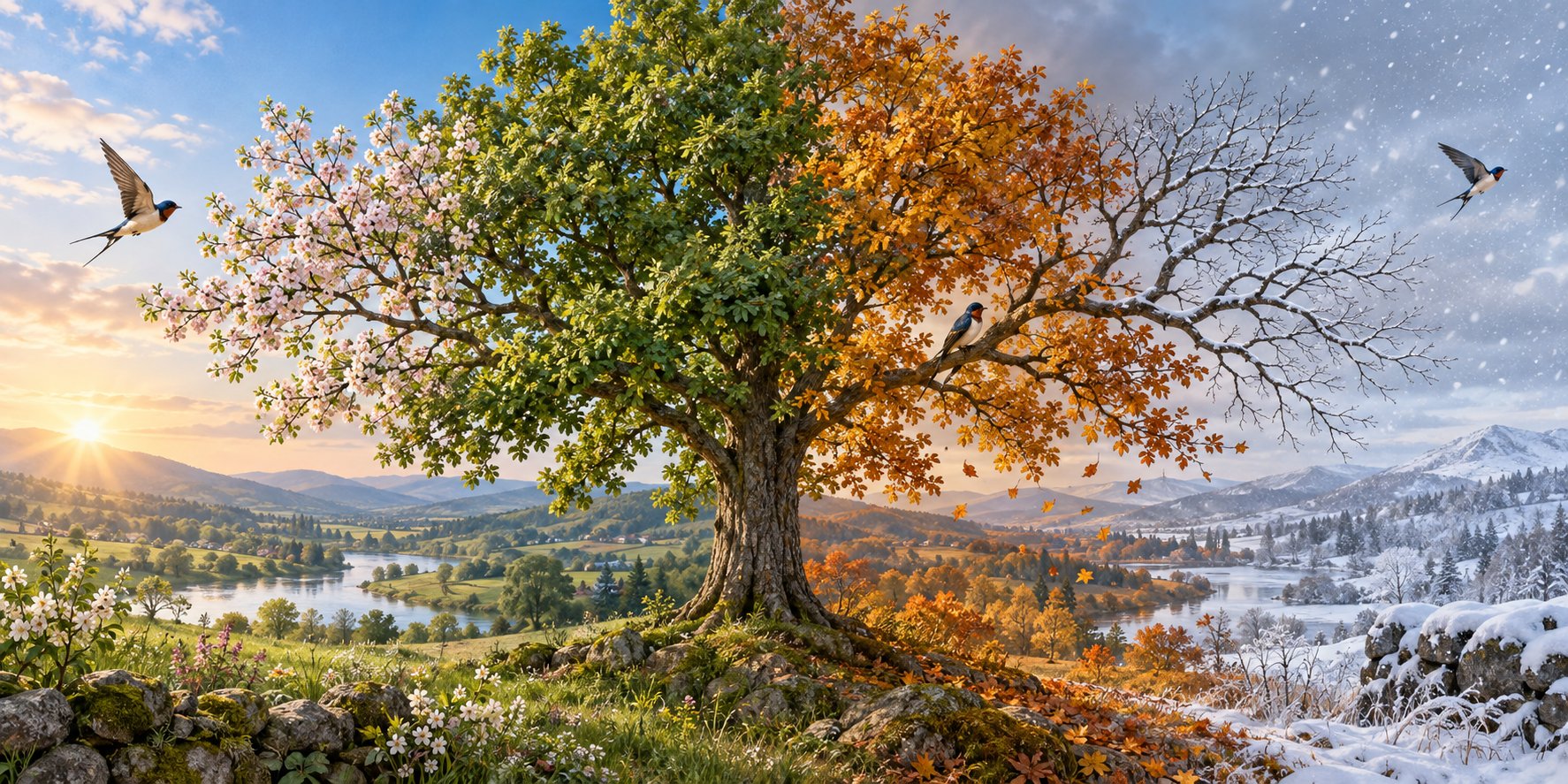
These follow an approximately yearly pattern and sit within the broader infradian family. They are especially clear in seasonal reproduction, migration and hibernation in animals.
- Animal migration and hibernation
- Seasonal reproduction
- Season-linked human changes
It comes from the Latin:
- circa: approximately or around
- annum: year
Circannual therefore means about a year and describes biological patterns that recur approximately once each year.
Your brain coordinates clocks throughout the body
The suprachiasmatic nucleus, or SCN, is a small region in the hypothalamus that receives information about light from the eyes. It acts as a master coordinator for circadian rhythms.
Nearly every tissue and organ also has its own molecular clock. The SCN helps these clocks stay aligned with one another and with the outside day.
Explore the NIH circadian guideLight is the strongest cue
Morning and evening light help move the phase of the circadian system and align it with local time.
Food gives timing information
Meal timing can influence clocks in organs involved in digestion and metabolism.
Activity is another signal
Movement, social routines, stress and temperature can also affect biological timing.
Clocks can disagree
Jet lag and shift work move behaviour faster than the body can fully adjust.
Moon, tides and seasons
Nature provides many repeating cues, but similar lengths do not prove the same cause. A roughly monthly human process is not automatically controlled by the Moon.
Life around the tides
Many coastal organisms time feeding, movement or reproduction around the approximately 12.4-hour tidal cycle. These are powerful examples of biology tuned to a repeating environment.
Life around the lunar month
Some marine species synchronise behaviours with moonlight or lunar-linked tides. Evidence for strong, general lunar control of human physiology is far less certain.
Explore Moon phasesLife around the year
Changing day length helps organise migration, reproduction, coat changes and hibernation. Human mood and sleep can also show seasonal influences.
Classic curves begin with simple, memorable rules
One tradition calculates repeating curves from a birth date; the other observes repeating changes in the body. Together they show how deeply people are drawn to order, timing and cycles.
Elegant mathematical curves calculated from a birth date.
Body clocks involving genes, cells, nerves, hormones and environmental cues.
Follows the classic 23, 28 and 33-day periods throughout life.
Can shift with light, food, activity, age, health and environment.
Physical, emotional and intellectual lines rise, cross and fall in a repeating personal pattern.
Sleep studies, temperature, hormones, gene activity and behaviour reveal changes over time.
People compare the curves with lived experience, intuition and the order they sense in the universe.
Chronobiology helps explain familiar experiences such as sleep timing, jet lag and seasonal change.
Six words that make chronobiology easier
Period
The time needed for one full cycle.
Frequency
How many cycles occur within a chosen time.
Phase
Where the rhythm currently sits in its cycle.
Amplitude
How far the signal rises and falls.
Entrainment
Alignment of an internal rhythm to an outside cue.
Zeitgeber
A time-giver such as light that helps set a clock.